SASSA SRD R370 Grant
The SASSA SRD R370 grant is a monthly payment of R370 for South Africans aged 18 to 59 with little or no income. It is assessed month by month against a means test of R624 in bank inflows, and has been extended to 31 March 2027. This independent guide explains who qualifies and what the decline reasons mean.
What Is the SRD R370 Grant?
SRD R370 Eligibility Checker
Answer three questions to see if you are likely to qualify for SRD R370.
SRD R370 Means Test Estimator
Enter your monthly bank inflows and check them against the R624 means test.
The Social Relief of Distress (SRD) grant is a temporary form of social assistance administered by the South African Social Security Agency (SASSA), for people in financial distress with no other means of support. The current amount is R370 per month.
It is different from SASSA's permanent grants, such as the Older Persons Grant, Child Support Grant and Disability Grant, which have their own eligibility rules and fixed payment schedules. The SRD grant is assessed month by month, so you can qualify in one month and not in another.
The SRD grant has been extended to 31 March 2027; any change after that date would need to be confirmed from an official source. It has no fixed calendar payment date. If you are approved for a month, your individual pay date is shown on your status page on srd.sassa.gov.za. Payment dates in detail are in the proposed article on SRD payment dates, not here.
Who Qualifies for the SRD R370 Grant?
The basic qualifying conditions are:
| Requirement | Rule |
|---|---|
| Age | 18 to 59 years old |
| Identity | South African citizen, permanent resident, or refugee registered on the Home Affairs system |
| Income | Monthly bank inflows of R624 or less (the means test) |
| Other support | Must not receive other government support that disqualifies you under the SRD rules |
A person under 18 or over 59 does not qualify on age grounds, even with no income. They may qualify for a different grant, such as the Child Support Grant for a child in their care or the Older Persons Grant from age 60.
Residence and Identity
SASSA must confirm your identity through the Department of Home Affairs. You need a valid South African ID number, or the recognised registration that applies to your status. If your identity cannot be confirmed, your application cannot be approved; that problem is covered in the proposed article on identity verification. Do not apply using someone else's ID number.
Income and Other Support
The means test is the main income rule: your total monthly bank inflows must be R624 or less. Receiving another grant or a regular government payment can also affect SRD eligibility — for example, a person who already receives a permanent SASSA grant does not also qualify for the SRD grant for the same period. The exact interaction between different grants is set by SASSA's rules, and any specific combination should be checked against an official source before it is stated as a rule.
Whether a Child Support Grant collected for a child affects SRD eligibility is not stated as a fact in this article. [VERIFY — do not state whether collecting a Child Support Grant for a child affects SRD eligibility until this is confirmed from an official source.]
SRD R370 Grant Requirements
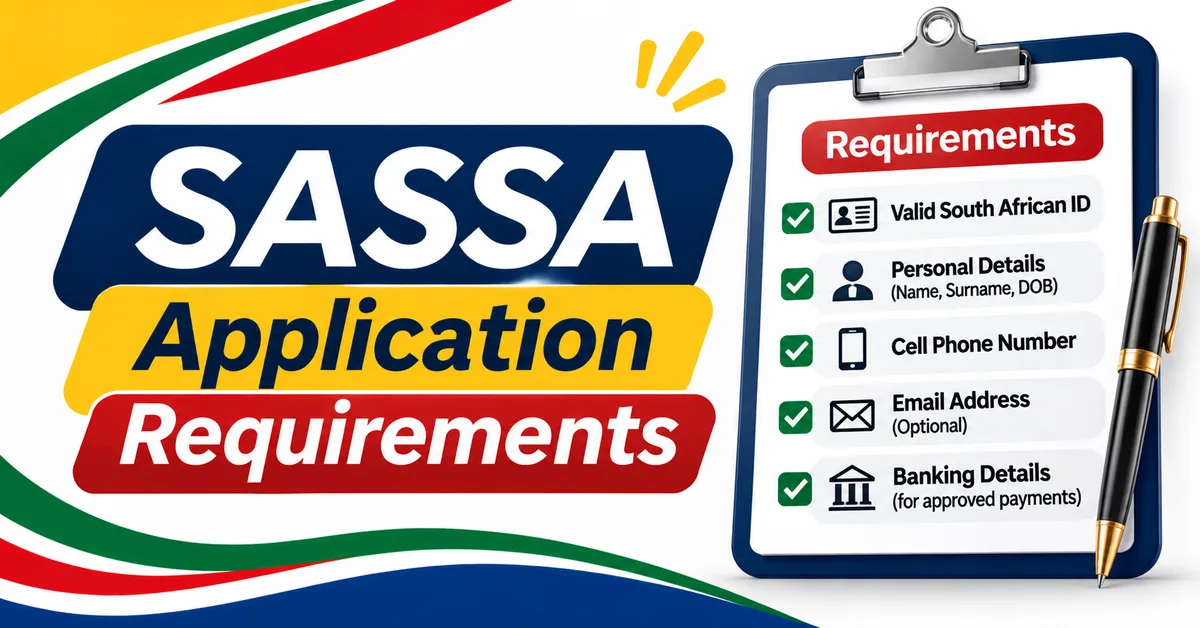
In short, you generally need to be aged 18 to 59, have a valid ID number or recognised registration, have a cellphone number SASSA can use to contact you, have bank inflows of R624 or less per month, have a bank account in your own name (or use another payment method SASSA offers), and not be receiving other disqualifying government support.
You do not need to be employed to qualify — the grant is aimed at people without sufficient income. But you must meet all of these conditions for the month in question; meeting them in one month does not guarantee you will meet them in the next. The documents and application steps are not covered in detail here; they are in the proposed articles on the SRD SASSA grant application and on application requirements and documents.
The SRD R370 Means Test: R624 per Month
The means test is the income test for the SRD grant. The threshold is R624 per month in bank inflows.
How the Means Test Works
SASSA looks at the money flowing into your bank account for the month. If the total inflows are R624 or less, you pass for that month. If they are more than R624, you do not pass, and your application for that month can be declined for that reason.
The test is applied month by month. A month over R624 does not automatically disqualify you for later months; if your inflows fall to R624 or less later, that month is assessed on its own facts.
The precise treatment of a particular payment — for example, a once-off transfer from a family member — is a matter for SASSA's rules and should not be guessed at here. If unsure whether a payment counts, check srd.sassa.gov.za or contact SASSA through its official channels.
What the R624 Threshold Does Not Mean
- It does not mean everyone with inflows below R624 is automatically approved. You must also meet the other requirements.
- It does not mean a single deposit over R624 always tells the whole story. The assessment is for the month as a whole.
- It does not mean the threshold is the same as the grant amount: R624 per month is the threshold; R370 per month is the grant.
SRD R370 Grant Verification
Verification is how SASSA checks your application before deciding whether you qualify for a month. It happens for each month assessed, not only once when you first apply.
What SASSA Checks
SASSA checks your details against records held by other government bodies and your bank records. Described generally, the checks can include confirming your identity with Home Affairs, checking for employment or income records, checking whether you receive other government support, and checking your bank inflows against the R624 means test.
The bodies involved are generally understood to include Home Affairs, the South African Revenue Service (SARS), the Unemployment Insurance Fund (UIF), the National Student Financial Aid Scheme (NSFAS), and your bank. This is a general description, not an exhaustive official list. [VERIFY — the complete official list of verification sources has not been confirmed from a single official source; do not present the list above as exhaustive.]
Verification is why a status can stay Pending for a time. While the checks are running, no decision has been made. Once they are complete, the status changes to Approved or Declined, with a reason shown if it is declined.
Why Verification Can Lead to a Decline
A decline can follow if the checks show something that conflicts with the SRD rules for that month — for example, bank inflows above R624, employment income, or a registration for another form of support that disqualifies you. The decline reason on your status page is the starting point for understanding which check caused the problem.
If you believe the result is wrong — for example, a record is outdated or belongs to someone else — do not simply reapply for the same month. Read the decline reason, gather evidence that the record is wrong, and use the reconsideration process, within 30 days of the decline. The full process is in the proposed article on SASSA SRD appeals.
"Income Source Identified" — What It Means
"Income source identified" is a decline reason that means SASSA's checks found a source of income for that month that takes you over the SRD income rules.
It does not by itself tell you exactly which payment or record caused the problem. It may relate to bank inflows above R624, or to another income record the checks picked up. If you believe you had no income above the threshold in that month, check your bank statement carefully, including any deposit you may have forgotten, such as transfers from other people.
If the income source was a once-off or incorrect entry, or the record is wrong, request reconsideration within 30 days. Keep your bank statement for that month — it is the clearest evidence of what came into your account. A decline for this reason applies to that month only.
"NSFAS Registered" — What It Means
"NSFAS registered" is a decline reason that means SASSA's checks found that you are registered with the National Student Financial Aid Scheme (NSFAS). NSFAS provides financial aid to students, and registration with NSFAS is treated as a form of government support that conflicts with SRD eligibility for that month.
If you see this reason, the NSFAS record — not your bank balance alone — is the stated reason. If you are not actually registered, or your registration ended before the month in question, the record may be outdated. Raise it through reconsideration within 30 days.
If you are registered with NSFAS and receiving NSFAS support, you do not qualify for the SRD grant for the same period. Do not cancel NSFAS support to claim the SRD grant without first understanding the consequences: the SRD grant is R370 per month, and NSFAS support may be worth more to you as a student.
"Not Approved" — What It Means for a Month
"Not approved" is a general way of saying that your SRD application was not approved for a particular month. It is not a separate status with its own procedure; it means the same as a decline for that month, for the reason shown on your status page.
Always read the specific reason next to it — for example, income source identified or NSFAS registered. The reason decides what you should do next; without it, you cannot tell whether the problem is income, identity, another grant, or a record error.
A month that is not approved can be challenged by reconsideration within 30 days, if you believe the reason is wrong. If reconsideration is denied, a further appeal to the Independent Tribunal for Social Assistance Appeals (ITSAA) must be lodged within 90 days after that denial. The two stages have different deadlines and are not interchangeable. The appeals portal in the site mapping is srd.dsd.gov.za/appeals. [VERIFY — confirm the exact path before publishing; secondary sources also give srd.sassa.gov.za/appeals.] The full process is in the proposed article on SRD appeals.
A "not approved" result for one month does not cancel your application for other months; each month is assessed on its own.
Do not use the SRD rules here to judge whether you qualify for a different grant. The SRD grant is the only one with the R370 amount and the R624 means test; other grants have their own articles and amounts (see /types-of-sassa-grants/ and /sassa-grant-amounts/).