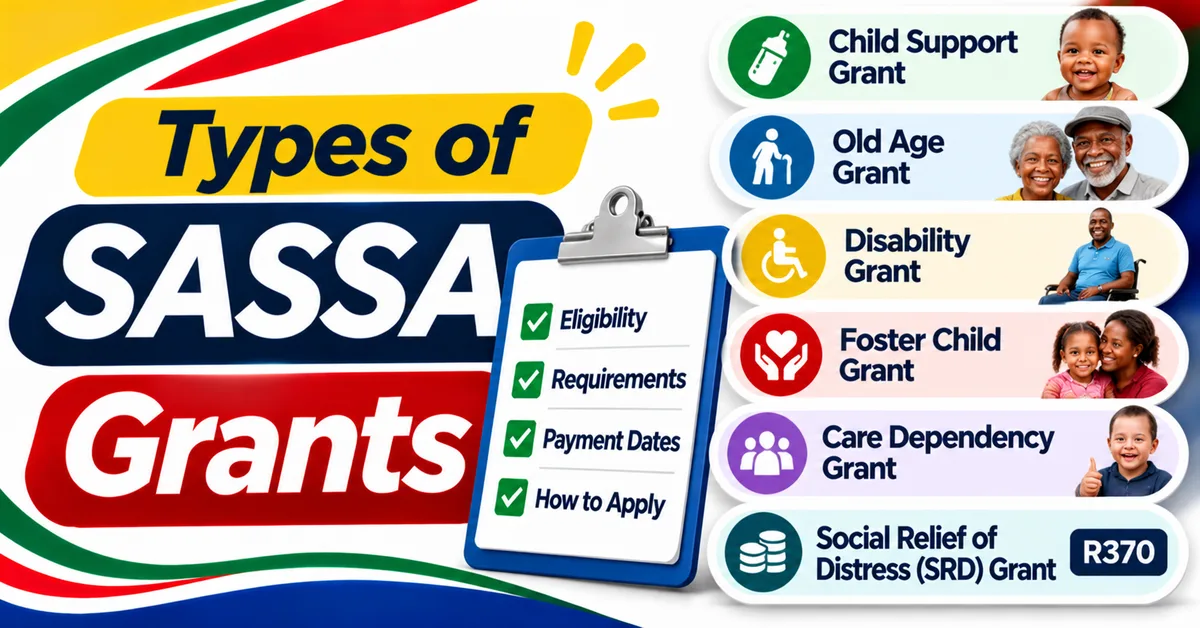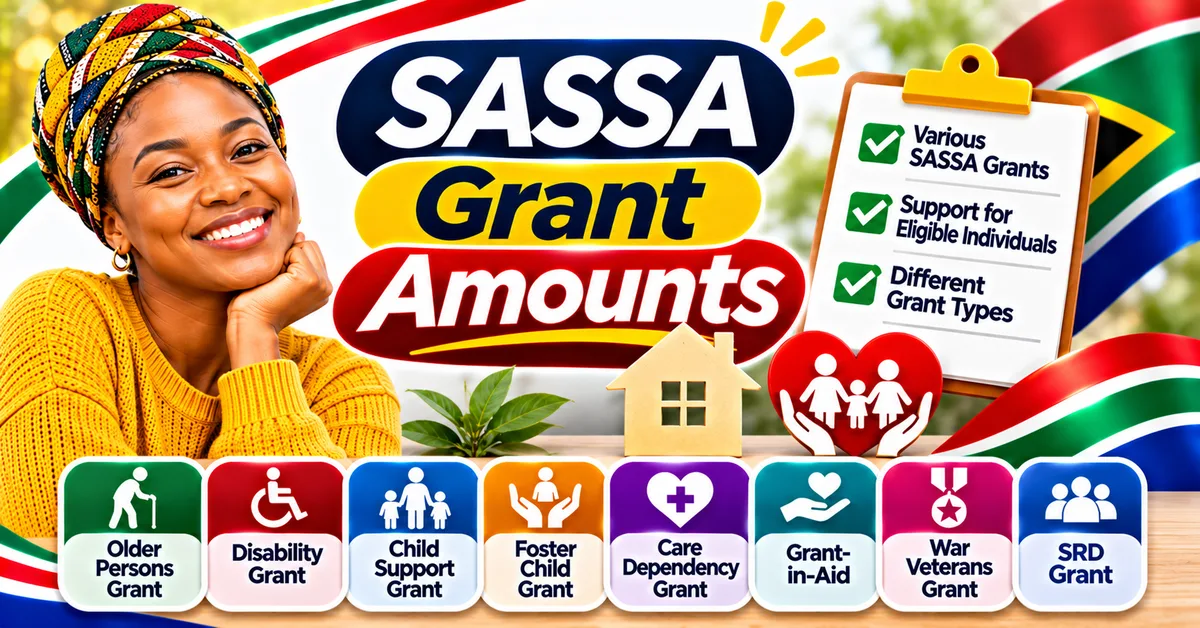
SASSA Disability Grant
The SASSA Disability Grant pays up to R2,400 a month to adults aged 18 to 59 whose physical or mental disability prevents them from working for at least six months. A state-appointed doctor must confirm the disability, and you must pass SASSA's means test on income and assets.
How Much Is the Disability Grant?
SASSA Grant Eligibility Checker
Check who qualifies for each SASSA grant and what it pays.
The maximum Disability Grant is R2,400 a month, from 1 April 2026, for the 2026/27 financial year ending 31 March 2027. It rose by R80 on 1 April 2026, from R2,320.
The amount is a maximum, not a fixed payment for everyone. The grant is paid on a sliding scale, so if you have other income, SASSA may pay you less than R2,400. If you have little or no other income, you receive the full amount.
If you receive the Disability Grant and you need full-time care because of your disability, you may also qualify for Grant-in-Aid of R580 a month on top of your grant. That is a separate application with its own medical assessment.
In December 2026, Disability Grants are paid on 3 December, according to the DSD 2026/27 payment schedule. In January 2027, they are paid on 6 January.
Who Qualifies for the Disability Grant?
You must meet all of these conditions:
- You are 18 to 59 years old. At age 60, the Disability Grant changes to the Older Persons Grant.
- You are a South African citizen, permanent resident, or recognised refugee living in South Africa.
- You have a physical or mental disability that prevents you from working and supporting yourself.
- The disability has lasted, or is expected to last, at least six months.
- You have been assessed by a state-appointed doctor who confirms the disability.
- You pass the means test — SASSA checks your income and assets, and your spouse's income and assets if you are married.
- You are not cared for in a state institution.
The disability does not have to be permanent. SASSA grants a temporary Disability Grant if the disability is expected to last between six and twelve months, and a permanent Disability Grant if it is expected to last longer than twelve months. [VERIFY] The exact 6–12 month and 12-month-plus bands for temporary vs permanent grants are stated in unofficial guides and were not verified against an official SASSA source during this draft — confirm the bands with SASSA when you apply.
The Medical Assessment
The medical assessment is the most important part of a Disability Grant application, and it is also the part most people misunderstand.
- A state-appointed doctor must assess you. Your own doctor's letter or a clinic report alone is not enough. SASSA arranges the assessment with a doctor it appoints.
- The assessment decides whether you qualify medically. The doctor must confirm that your condition stops you from working.
- Bring your medical records to the assessment — clinic cards, hospital records and any reports about your condition. These help the doctor, but they do not replace the assessment itself.
- A medical report is normally valid for three months, according to unofficial guides. [VERIFY] The three-month validity period was not verified against an official SASSA source during this draft, so do not rely on it — apply promptly once you have your assessment.
If the state doctor finds that your condition does not prevent you from working, your application will be declined on medical grounds. You can ask SASSA to reconsider the decision, and you can ask what further medical evidence would be needed.
The Means Test
SASSA uses a means test to check whether you need the grant. It looks at your income and your assets. If you are married, your spouse's income and assets are counted too.
[VERIFY] No rand income or asset limit is stated in this article. Published sources conflict on the 2026/27 limits — different guides quote different monthly income limits for a single applicant and different asset limits, and SASSA's own grant pages do not print a single fixed rand limit. Because the figures disagree, no limit is quoted here as confirmed. Confirm the current limit with SASSA on 0800 60 10 11 or at your nearest office before you assume you earn or own too much to qualify.
As with the SASSA Older Persons Grant, the means test considers income and assets together, and the grant is paid on a sliding scale, so having some income does not automatically disqualify you.
How to Apply for the Disability Grant
- Apply in person at a SASSA office. The Disability Grant is not applied for on the SRD portal at srd.sassa.gov.za — that portal is only for the SRD R370 grant. You can also apply online at services.sassa.gov.za, but the medical assessment itself happens in person.
- Take your South African ID document with you.
- Complete the application form at the office. If you cannot go to the office yourself because of your disability, a family member or friend can apply on your behalf with a letter from you and a doctor's note explaining why you cannot apply in person.
- Provide the documents SASSA asks for. These normally include proof of your income and assets, proof of your marital status if you are married, and any medical records you have. [VERIFY] The full document list is not given here, because it depends on your circumstances — confirm it with SASSA before you travel.
- Attend the medical assessment arranged by SASSA with a state-appointed doctor.
- Wait for SASSA's decision. SASSA will tell you whether your application was approved. If it is approved, payment starts from the date you applied.
- If your application is declined, you can ask SASSA to reconsider it. Ask at the office or call 0800 60 10 11 for the reconsideration process.
Applications are free. Never pay anyone to apply for you, and never share your ID number, OTP or banking details with someone who contacts you first.
Temporary vs Permanent Disability Grant
| Type | When it applies |
|---|---|
| Temporary Disability Grant | Disability expected to last for a limited period — SASSA reviews it and it must be renewed if the disability continues |
| Permanent Disability Grant | Disability expected to last for a longer period — still reviewed from time to time |
A temporary grant does not become permanent automatically. If your disability continues after a temporary grant ends, you must apply again and be assessed again. SASSA may also review a permanent grant from time to time, and may ask you to attend another medical assessment.
[VERIFY] The review periods and renewal rules for temporary and permanent grants were not verified against an official SASSA source during this draft. Confirm the review period for your grant with SASSA when it is approved.
How the Grant Is Paid
The Disability Grant is paid monthly, on the payment date for Disability Grants in the DSD schedule. It is normally paid into your bank account. If you do not have a bank account, ask SASSA at the office about the payment options available to you.
If your payment does not arrive on the payment date, wait a day and check your bank account again. If it still has not arrived, call SASSA on 0800 60 10 11 with your ID number ready.
What Changes Must You Tell SASSA About?
Tell SASSA if any of these change, because they can affect your grant:
- Your address or cellphone number.
- Your marital status.
- Your income — for example, if you start earning again.
- Your medical condition — especially if it improves enough for you to work.
- Your living situation — for example, if you move into a state institution.
- Your bank account details.
If SASSA finds out about a change you did not report, your grant can be suspended or stopped, and you may have to repay money you were not entitled to.